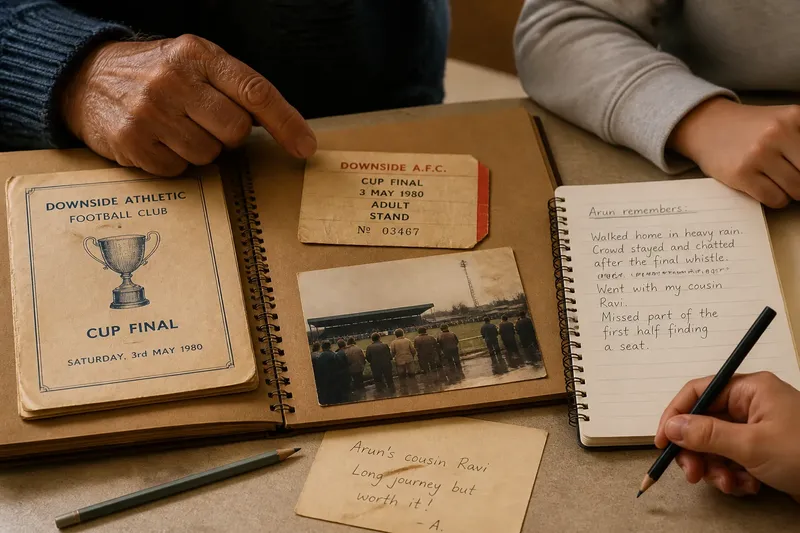
The Myth That Every Fan Belongs in the Same Way
Fan belonging can grow through family, local ties and shared rituals, not just match attendance. See how distinct connections enrich a club’s culture.
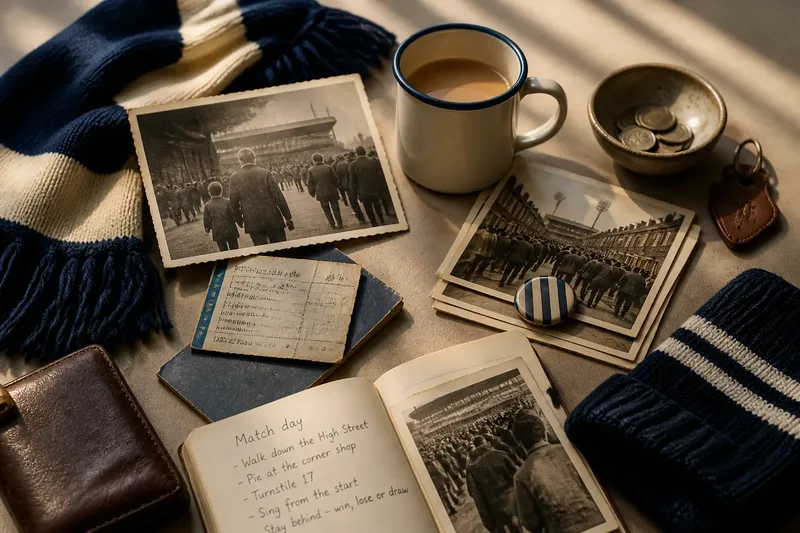
Fan belonging can begin with a club badge on a grandparent’s coat, a neighbour’s match-day stories or the familiar walk past a local ground. It does not require encyclopaedic knowledge, a season ticket or a voice in every chorus. The myth is that everyone must follow the same script to count.
Belonging grows through different connections: knowledge, place, inherited stories, personal rituals, cultural memory and the meanings people attach to a club. These ties can overlap, but none has to look like another supporter’s.
Can knowledge deepen fan belonging without becoming a test?
Some supporters love tactics, formations and the small decisions that shape a game. Others know a club through its old ground, its colours or the stories told over a kitchen table. Knowledge can deepen a connection, but it is not an entrance exam.
Specialist knowledge has its own pleasures: recognising a press, remembering a young player’s early appearances, or debating why a substitution changed the mood. The trouble starts when fluency becomes a measure of worth. Asking what “playing off the shoulder” means can open a conversation rather than diminish it.
Explain the shorthand when it comes up; the conversation becomes richer for everyone.
How does a place become part of a club’s identity?
A club can carry the character of its surroundings: a neighbourhood’s street names, local accents, a river crossed on the way to the ground, or a ground tucked beside familiar shops. Such details give support a texture that is not captured by a result alone.
People may feel attached to that place even if their route into the club is indirect. Someone who moved away might keep the club in mind as a link to home; another person might come to know the area through a friend’s match-day routine. Place can be shared without being claimed as a test of who belongs.
Ask what a club’s surroundings mean to someone before assuming they share your memories.
What can family traditions pass on besides loyalty?
A family connection can carry habits, stories and small objects as well as allegiance. A grandparent’s scarf, a parent’s explanation of a ground’s nickname, or siblings’ regular match-day meal can make a club part of family life.
Imagine a teenager whose aunt has supported a local side for years. They begin by joining her on the train and choosing a half-time snack; later, they start recognising players and asking about an old photograph in her hallway. The observable result is a set of shared memories, while the teenager’s own reasons for caring remain free to develop.
Pass on the invitation and the stories; leave the next person room to make their own meaning.
Why do supporters create rituals around a club?
Rituals give a sporting connection a shape. A particular pub before a match, a radio switched on in the kitchen, a scarf folded beside the door or a message sent to a friend after the final whistle can turn an ordinary day into something anticipated.
Some rituals are collective and visible; others belong to one household or friendship. Their value lies less in strictness than in the associations they carry. When circumstances change, a ritual can change too, while the memory attached to it remains.
Notice which small habits carry meaning, and share their stories when someone asks.
How can a club’s memory belong to more than one generation?
Sporting memory is not only a record of famous victories. It also lives in stories about a first visit, a long journey home, a local hero or the way a crowd responded in a difficult season. Different generations remember the same club through different events and details.
Those memories can sit together without needing to be ranked. A long-time supporter may recall the old stand; a newer fan may remember the first time a friend brought them along. Listening across those experiences helps a club’s culture feel larger than any single person’s version of its past.
When a familiar story is told, invite another generation to add what they remember.
What questions help explain a fan’s connection?
Can someone feel close to a club from far away?
Yes. A club may connect someone to family, a former home or friendships that continue across distance. That bond can have its own rituals, even when it is not centred on the ground.
Does a family connection have to last unchanged?
No. People can inherit a club story and then make it their own, or feel differently about it at different points in life. A changing attachment does not erase the memories already made.
Can a supporter value a club’s history without knowing every detail?
Yes. A person can care about one story, place or tradition without mastering the whole archive. Asking an informed supporter about a particular memory is a good way to begin.
How can I ask about someone’s sporting memories?
Try asking which club tradition or story matters to them, then listen without turning the answer into a quiz. Their reply may reveal a connection you had not considered.
How can fan belonging change as life changes?
A supporter’s connection may grow through a friendship, shift towards family traditions or become quieter during a demanding period. Someone might return to a club through a familiar song or a visit to a place they had not seen for years. The form changes; the meaning need not disappear.
Say a person moves away from the neighbourhood where they first watched matches. They keep an old programme in a drawer, call a sibling after a big game and visit the ground when they are home. Those actions preserve a link to place and family without requiring the person to recreate their former routine.
Fan belonging is easier to understand when we ask what a club connects rather than who supports it in the approved way. One person’s bond may be rooted in local streets, another’s in family stories, and another’s in the rituals they have made with friends. Recognising those different roots gives a club’s shared culture more room to grow.